
I recently spoke in the agency lightning talks at mage.camp, the event for merchants running Magento and Adobe Commerce. With eight minutes on the clock, I picked one question: how do you make a B2B customer portal successful?
My answer comes down to one word. This post is the longer version of that talk, including the two client stories that made the point: Netceed and Chelmsford Safety Supplies.
Most portals don't fail at launch
A lot of B2B portals follow the same pattern. Months of planning, a big launch and a spike in logins. Then the line slowly drops, and customers drift back to phoning and emailing their orders in.
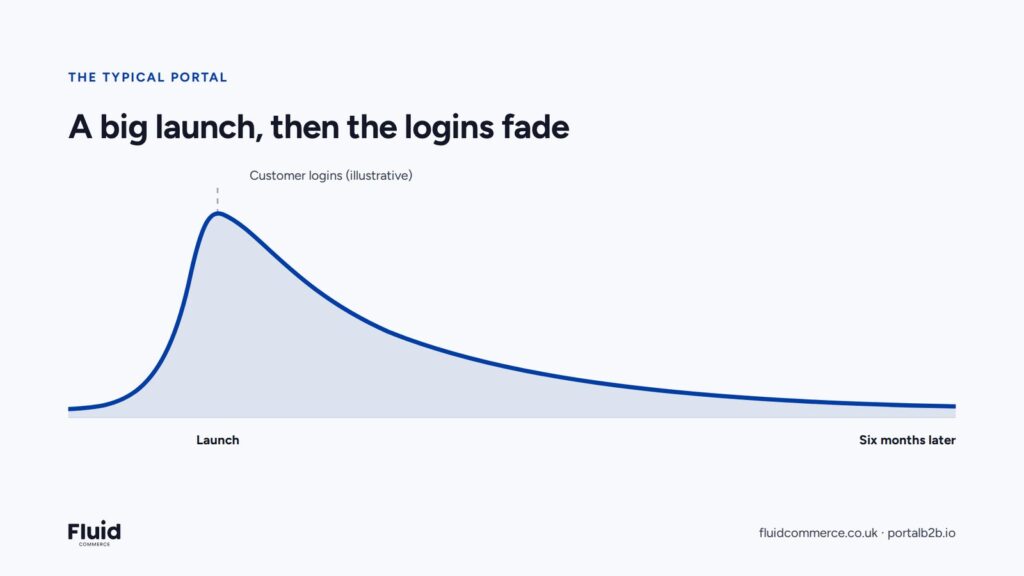
Most portals don’t fail on launch day. They fail quietly, six months later, when nobody logs in. So here’s a question worth asking about your own portal: do you know how many of your customers logged in last month?
It all comes down to one word: engagement
In my experience, whether a portal succeeds rarely comes down to the platform or the feature list. It comes down to engagement. A portal is only as good as the people using it.
That engagement has to happen on both sides of the counter:
- Internal engagement: your own sales, operations and marketing teams.
- Customer engagement: the buyers who actually place the orders.
Get both right and the portal grows. Miss either one and you end up with that fading line. Let’s start inside the business.
Internal engagement: get your own team behind it
Your portal needs champions inside the business before it can win customers over. Three teams matter most.
Sales: make it their best demo
Sales teams sometimes see a portal as a threat, as if it will take their accounts away from them. Flip that around. The portal is their best demo. Get reps showing it in pitches and account reviews, and make sure online orders still count towards their accounts, so they have every reason to push it.
Operations: let them shape it
Your customer service and fulfilment teams hear every complaint. Involve them early and they’ll help shape a portal that solves real problems. Then “check the portal” becomes their default answer.
Marketing: launch it like a product
Launch your portal like a product, not a feature, and keep promoting it long after launch day.
Case study: how Netceed used its portal to win a nationwide contract
Netceed is a distributor to the telecoms and broadband sector, and one of our clients. Its trade portal runs on Adobe Commerce with a Hyvä frontend.
When Netceed tendered for a large nationwide contract with CityFibre, the portal wasn’t an afterthought. It was a key advantage in the bid. Netceed customised the experience specifically for CityFibre’s users, with custom workflows and functionality built around the way CityFibre works.
In July 2026, CityFibre appointed Netceed as its strategic inventory management partner.
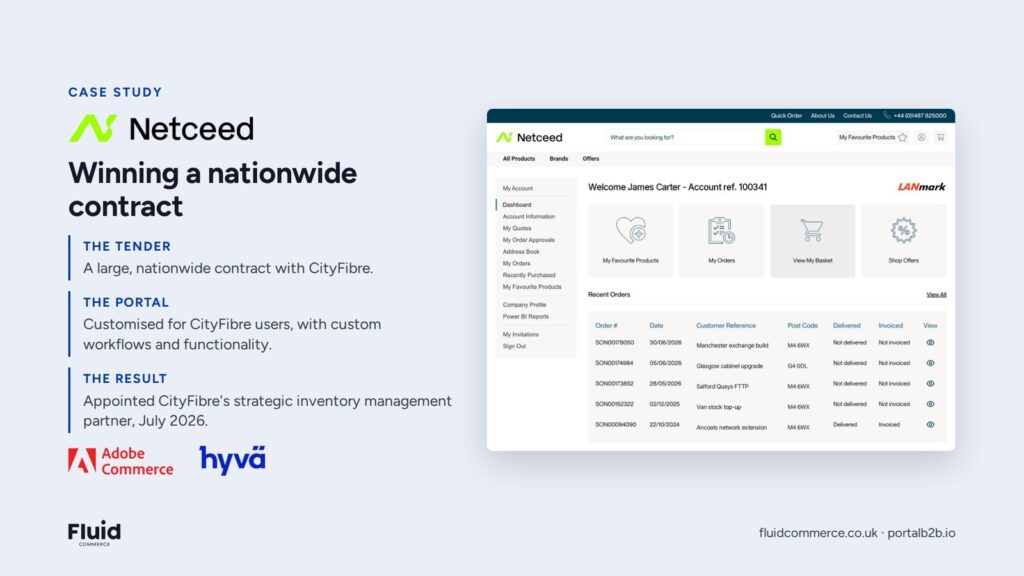
In that bid, the portal was part of the proposition. And it hasn’t stopped there. The UK portal has been well received by Netceed’s customers, and we’re now rolling the same model out across Netceed’s global operations, with European and US stores in development.
That’s internal engagement at its best: a sales team using the portal to win new business.
Customer engagement: give them a reason to log in
Nobody changes how they buy just because you launched a website. Three things make the difference.
- Why: give them a reason. What can customers do in the portal that’s faster or easier than picking up the phone? Their prices, stock, reorders and invoices, all in one place. Make that the headline.
- How: show them. Run onboarding sessions, make short how-to videos, and place a first order together.
- Hand-holding: stay close. Watch the first 90 days. If an account hasn’t logged in, don’t wait for them to find it. Pick up the phone.
Case study: Chelmsford Safety Supplies and the phased rollout
Chelmsford Safety Supplies is doing exactly this right now. Its trade portal is built on Magento Open Source, with Portal B2B and a Hyvä frontend. Rather than switching every customer on at once, Chelmsford is running a phased rollout:
- A beta with select customers: a small group first, not everyone at once.
- White glove onboarding: key clients get a hands-on, personal start.
- Feedback and iteration: input from those clients and from Chelmsford’s own team goes straight back into the portal, refining its functionality and ease of use before it rolls out to everyone.
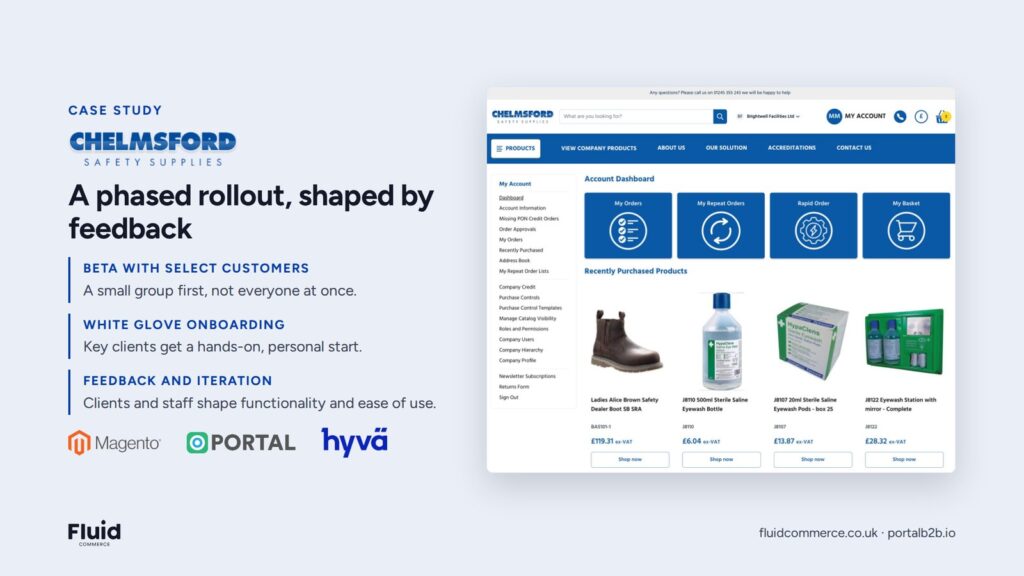
One thing that feedback made clear is that different customers work, and order, in very different ways. So the portal is built to let Chelmsford set up each customer differently, and every customer gets a portal that works the way they do.
That’s what makes it sticky. It isn’t just a place to order; it strengthens the relationship.
The engagement loop
Step back and both stories follow the same loop. Engage people, inside the business and out. Listen to what they tell you. Build what they need. Then go back and re-engage them with what’s changed.
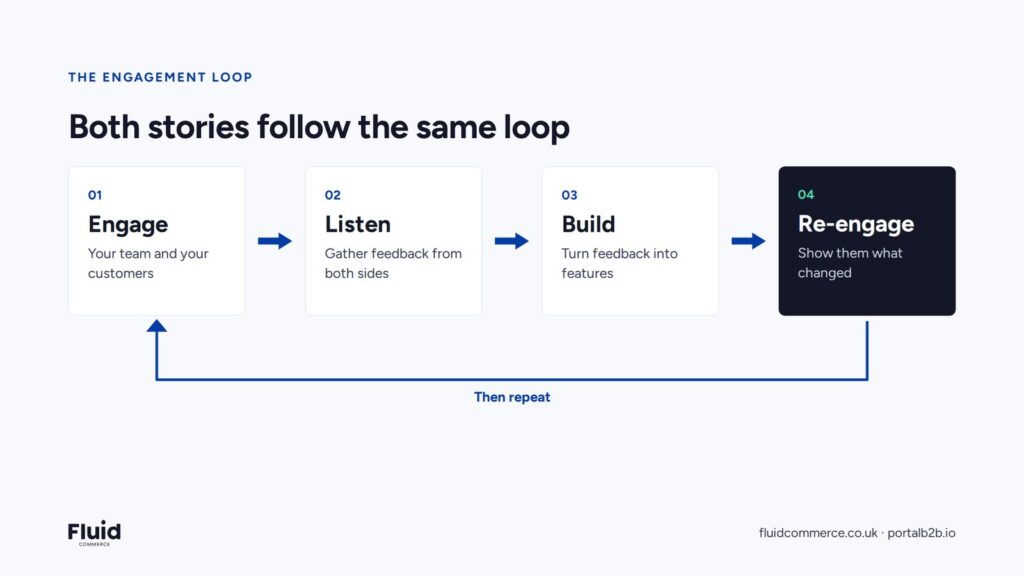
Every turn of that loop makes the portal more useful, and useful portals get used. That’s the difference between the fading line we started with and this one:
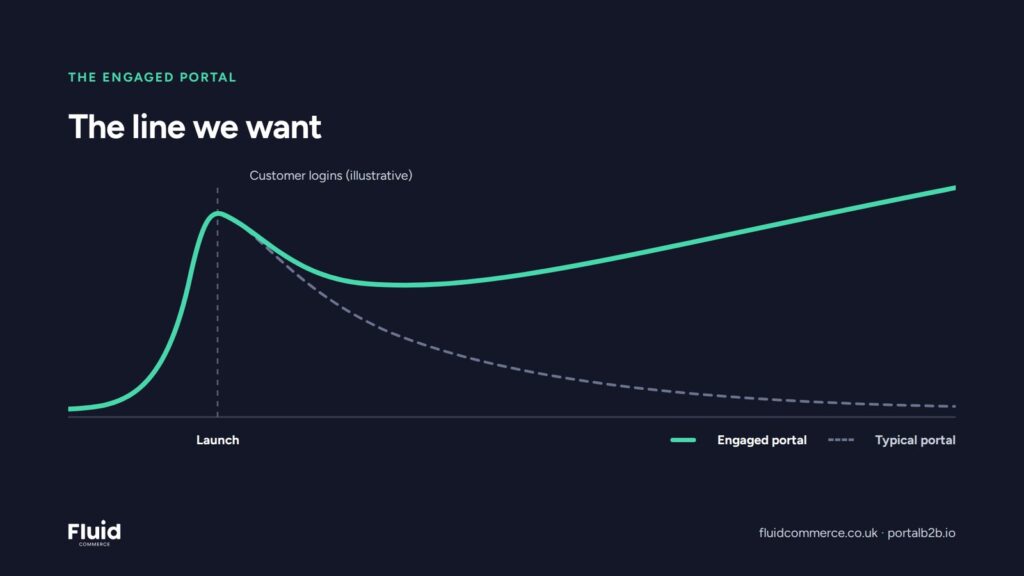
The difference between those two lines isn’t the technology. It’s engagement.
Three things to do tomorrow
If you take one thing from this post, make it one of these:
- Back your sales team. Give them a reason to champion the portal.
- Name the reason. Decide the one reason a customer must log in, and tell them.
- Ask, then build. Ask 10 customers and 5 of your own team what would make them use the portal more. Then build it.
Thanks to the mage.camp organisers for having me, and to everyone who came along to the lightning talks.
If your portal has stalled since launch, or you’re planning one and want it to stick, we’d love to talk. Get in touch with Fluid Commerce to talk through your portal, or find out more about our Magento B2B suite at portalb2b.io.